Why Psychosocial Hazards Are Often a Symptom of Deeper Organisational Issues
The introduction of psychosocial hazard obligations under Australian workplace health and safety legislation has changed how organisations approach employee wellbeing, workplace culture, and risk management. While many organisations focus on measuring employee sentiment through engagement surveys and wellbeing initiatives, compliance requires a more proactive and systematic approach.
At Integris Group Services, we help organisations understand that psychosocial risks rarely emerge in isolation. Excessive workloads, unclear roles, poor communication, ineffective change management, and inconsistent leadership are often symptoms of broader organisational systems and governance challenges. Effective psychosocial risk management therefore requires more than identifying hazards—it requires understanding why those hazards exist and implementing sustainable controls.
Our approach combines governance review, organisational diagnostics, risk management, leadership capability, and workplace systems analysis to help organisations meet their obligations under WHS legislation while improving organisational performance. By aligning with frameworks such as ISO 45003 and Safe Work Australia’s guidance, we help organisations move beyond compliance and build workplaces that are safer, more resilient, and better equipped for long-term success.
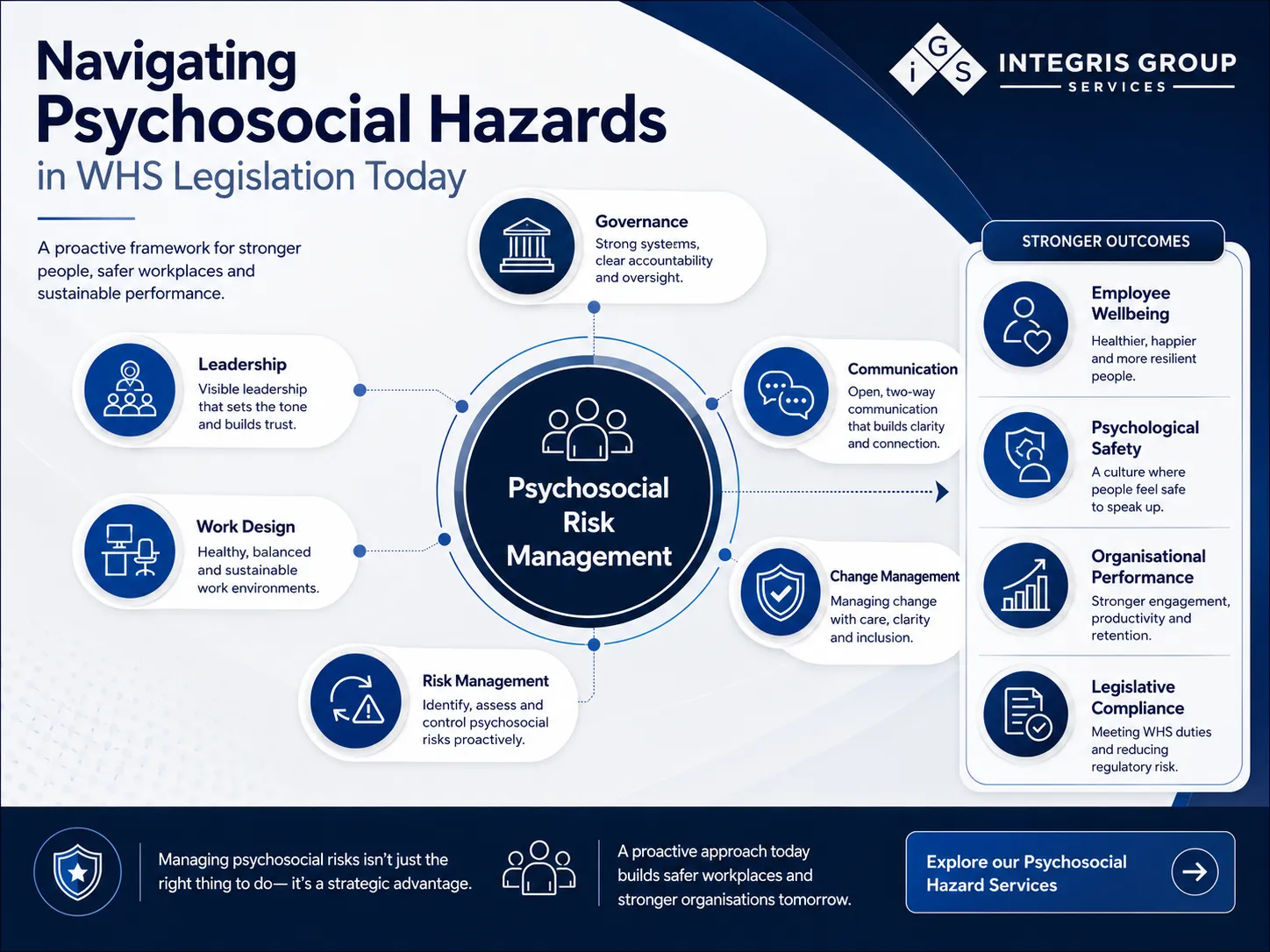
Managing Psychosocial Risks Requires More Than a Survey
Our core competencies
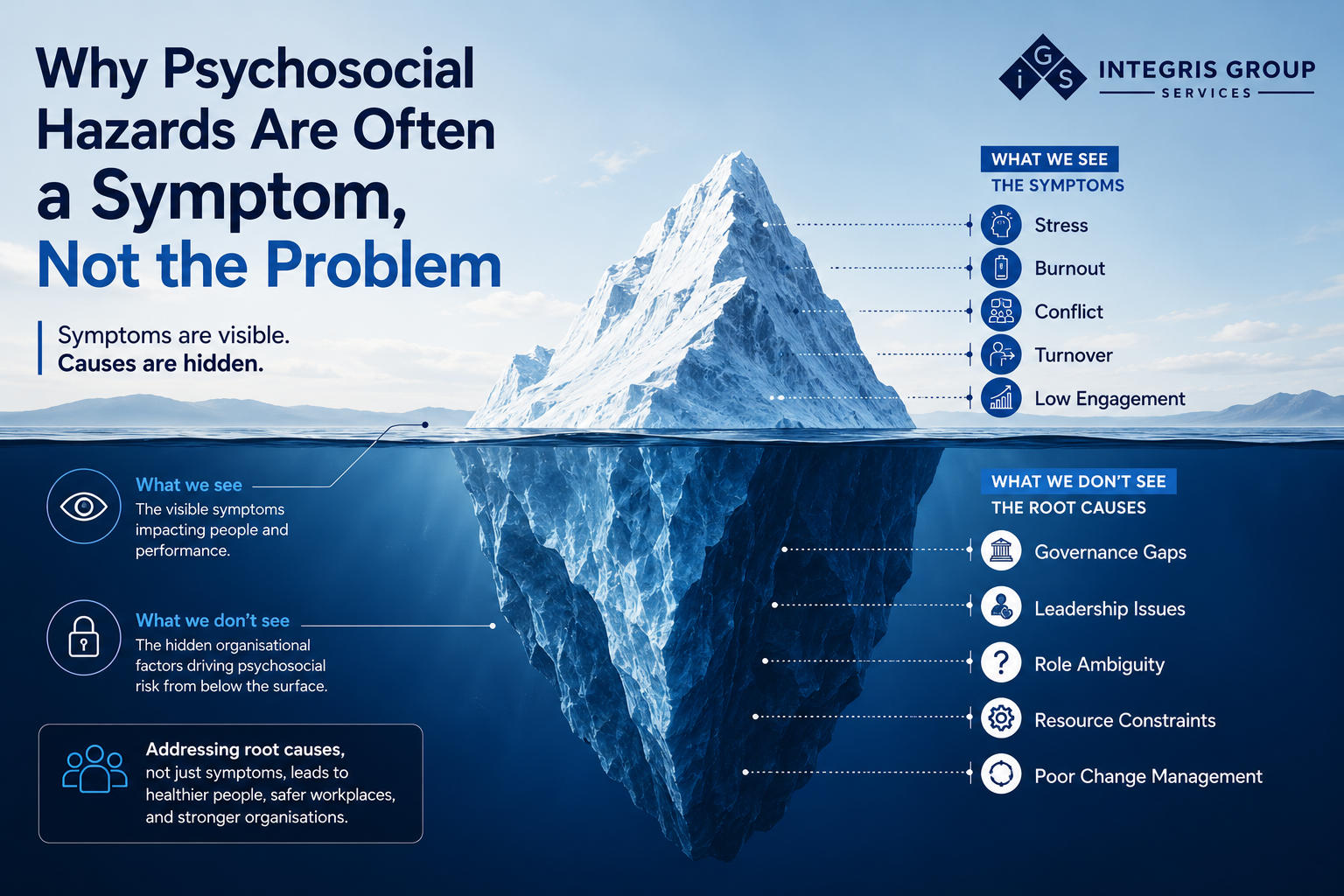
Why Psychosocial Hazards Are Often a Symptom, Not the Problem
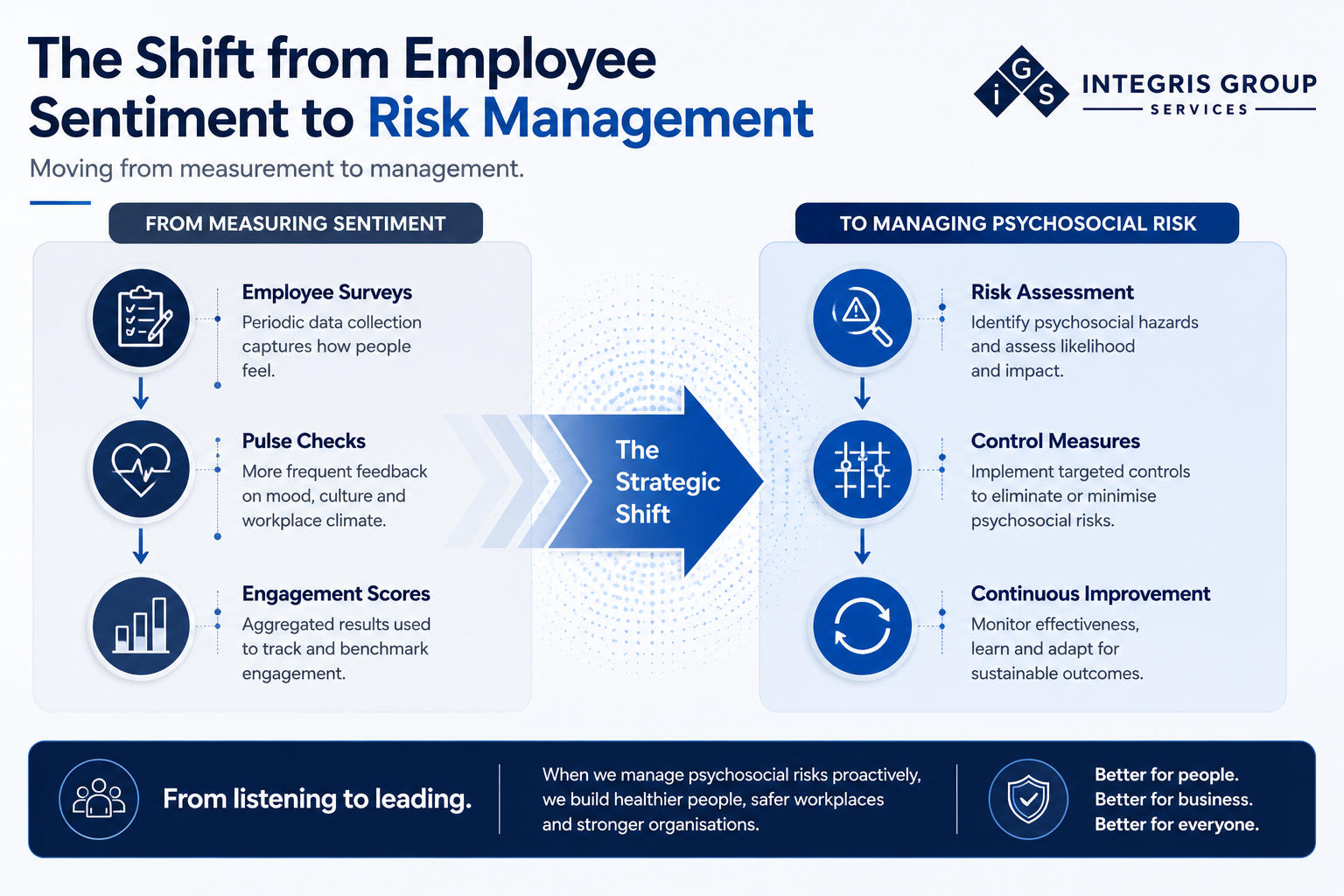
Safe Work Australia’s Model WHS Laws and Code of Practice
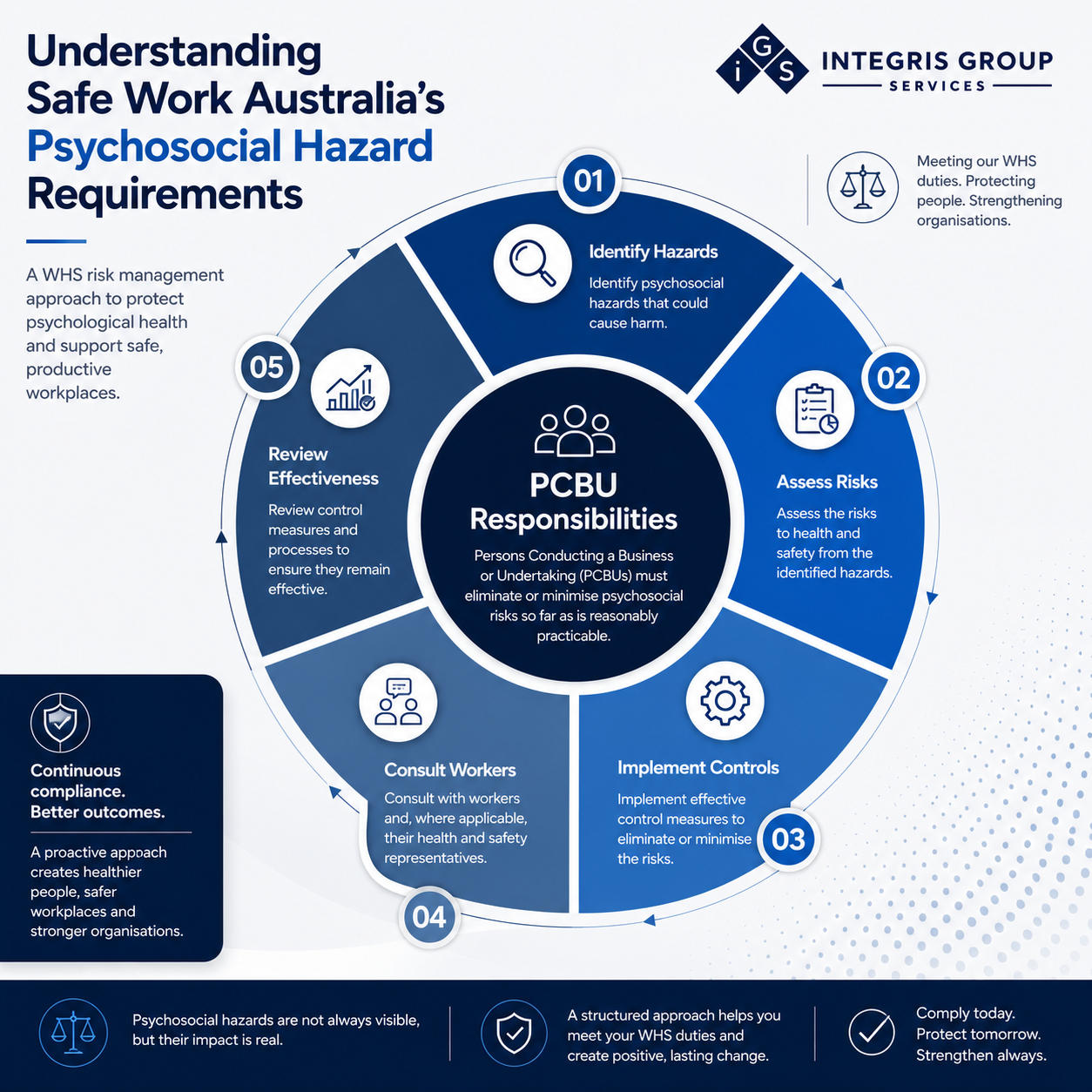
Understanding Safe Work Australia’s Psychosocial Hazard Requirements
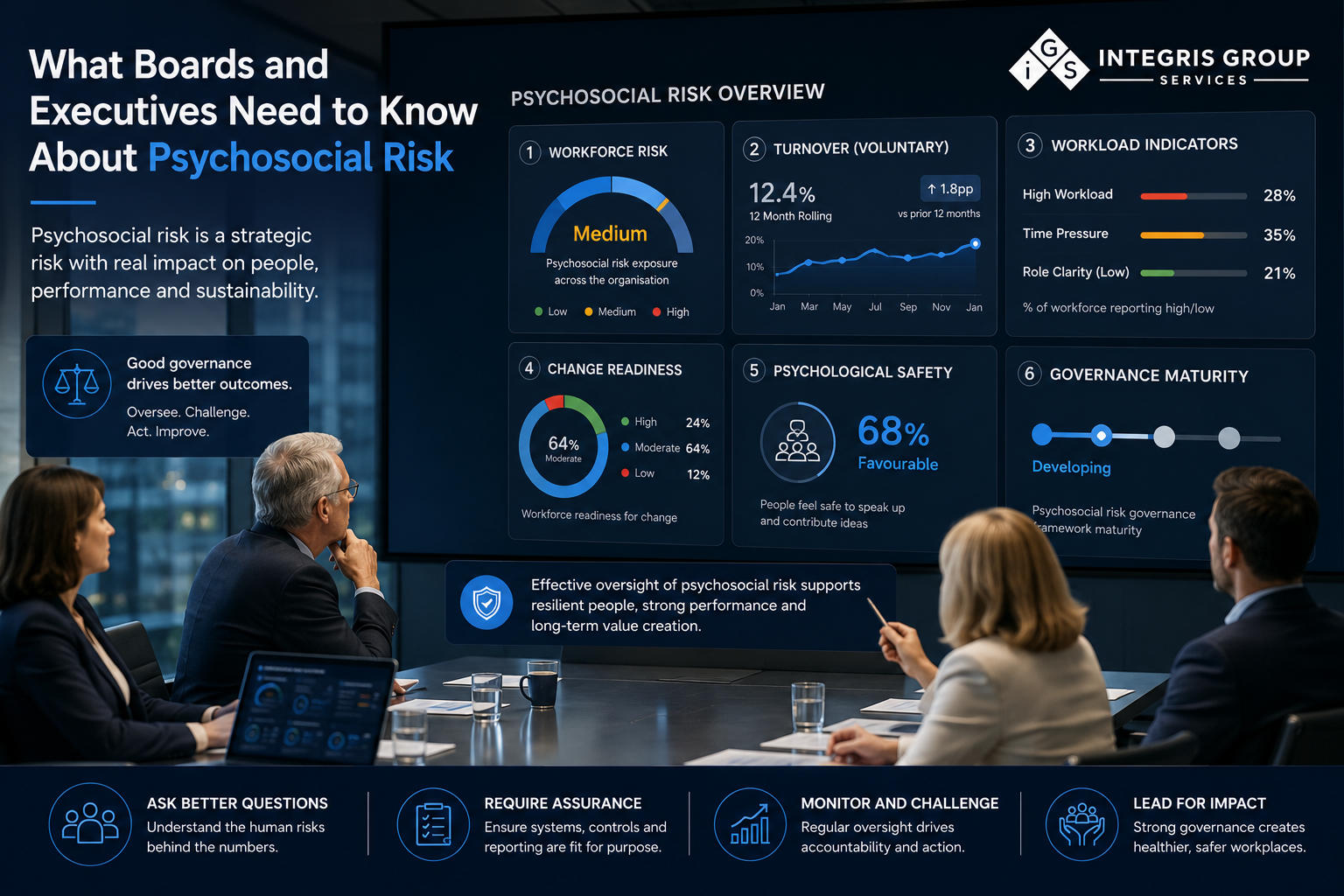
What Boards and Executives Need to Know About Psychosocial Risk
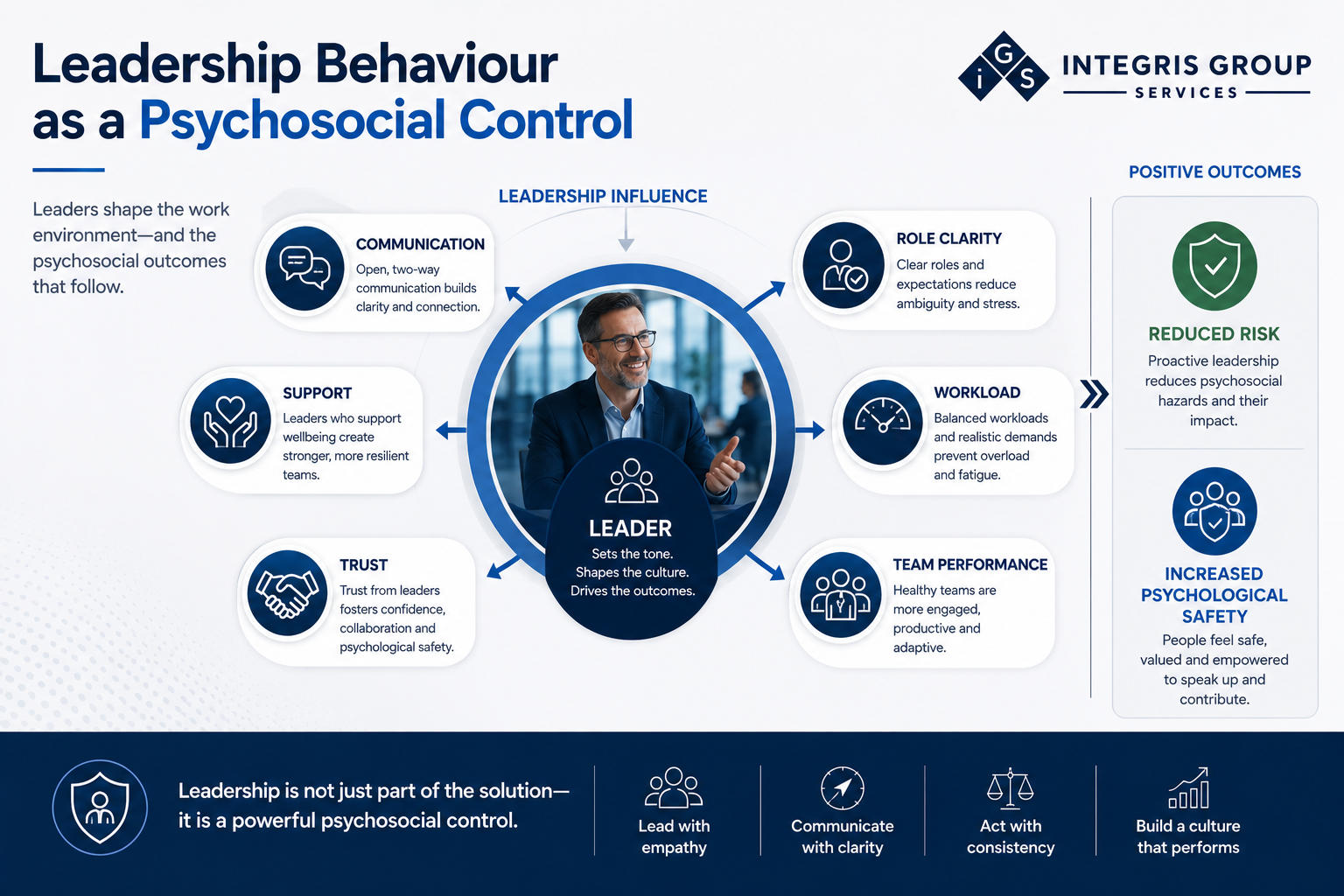
Leadership Behaviour as a Psychosocial Control
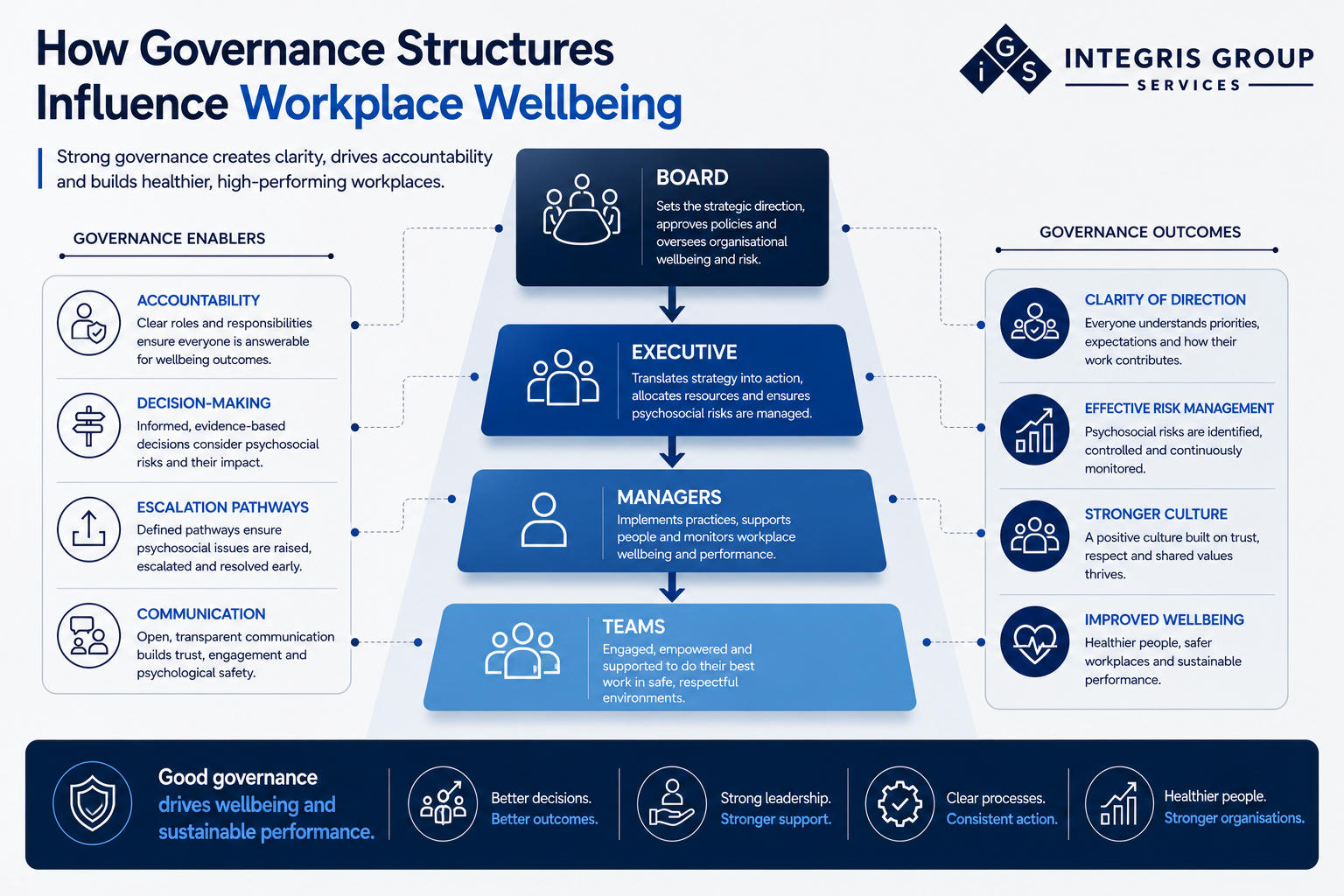
How Governance Structures Influence Workplace Wellbeing
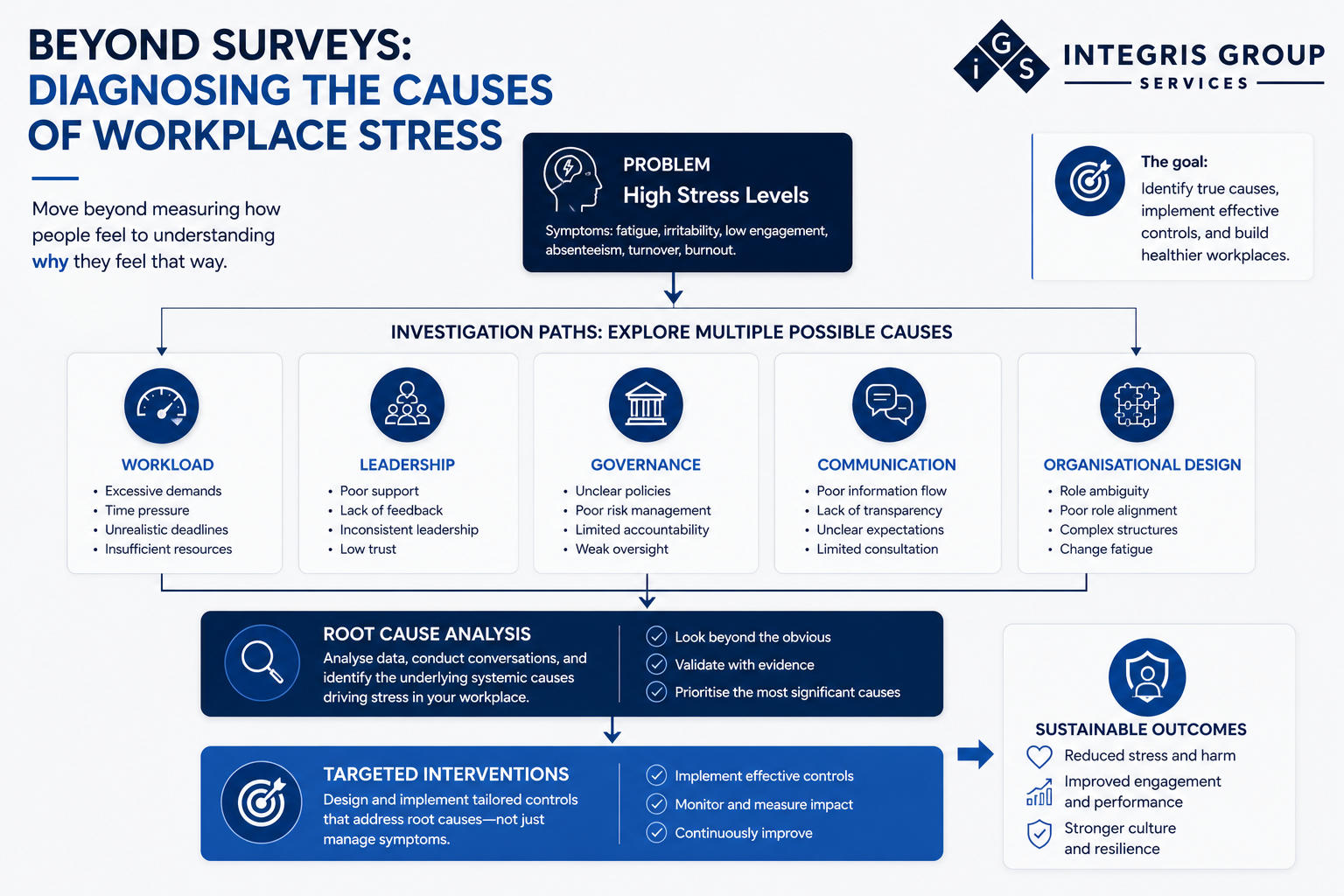
Beyond Surveys: Diagnosing the Causes of Workplace Stress
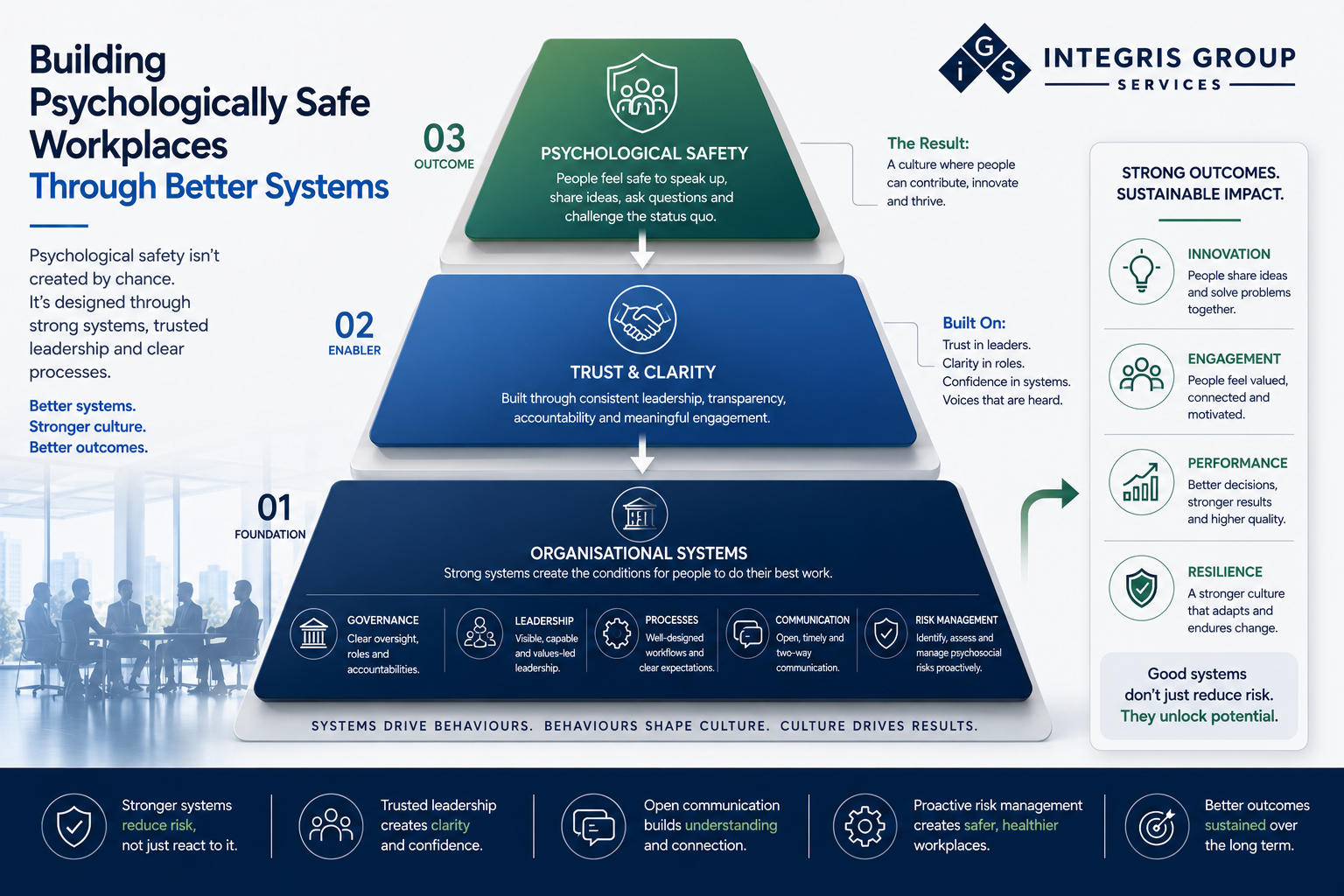
Building Psychologically Safe Workplaces Through Better Systems
Common Questions
Psychosocial hazards are aspects of work design, organisational systems, leadership practices, or workplace interactions that may negatively affect a worker’s psychological health. Examples include excessive job demands, poor support, role ambiguity, workplace conflict, and ineffective change management.
Employee engagement measures how employees feel about their workplace, while psychosocial risk management focuses on identifying and controlling the organisational factors that may contribute to psychological harm. Engagement scores often reveal symptoms, whereas psychosocial risk assessments help identify underlying causes.
Under Australian WHS legislation, PCBUs have a duty to identify, assess, eliminate or minimise psychosocial hazards so far as is reasonably practicable. This requires a proactive risk management approach rather than simply measuring employee sentiment.
ISO 45003 provides guidance on managing psychosocial risks within an occupational health and safety management system. It helps organisations identify psychosocial hazards, assess risks, and implement controls to support worker wellbeing and organisational performance.
Integris Group Services helps organisations assess psychosocial risks through governance reviews, organisational diagnostics, leadership assessments, policy development, risk management frameworks, and workplace systems analysis. Our approach focuses on identifying root causes rather than simply measuring symptoms.
Psychosocial hazards frequently emerge from deeper challenges such as unclear governance structures, ineffective leadership, poor workload planning, inadequate communication systems, or organisational change that has not been properly managed.