LTO Lithium Battery Solutions for Your Car Audio Needs
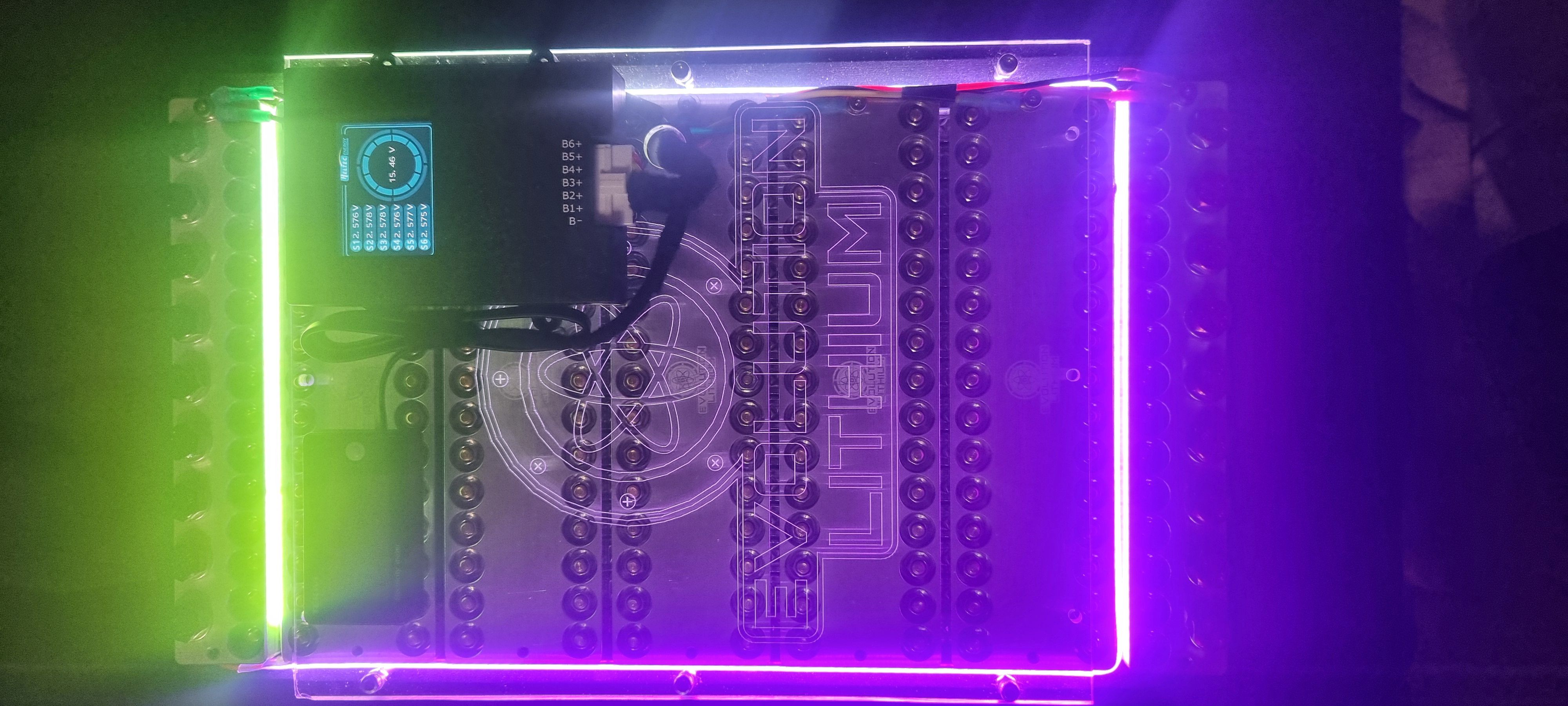
At Evolution Lithium, our focus is on premium SCiB LTO battery solutions, meticulously crafted for automotive audio aficionados. Our cutting-edge LTO lithium batteries enhance your system's voltage stability, allowing you to fully experience your sound system with peak safety. With rugged design and exceptional efficiency, our products are more than mere upgrades; they are essential for high-performance audio environments. Whether you use your vehicle daily or engage in SPL competitions, Evolution Lithium equips you to transform your car's auditory capabilities.
Article
Boosting Voltage Consistency with SCiB LTO Batteries

Selecting the Ideal Lithium Battery for Your Audio Setup

Enhancing Performance and Safety for Your Car Audio System
Frequently Asked Questions
SCiB LTO batteries play a pivotal role in car audio setups, delivering substantial quick currents while maintaining voltage integrity under demanding amplifier conditions. These batteries excel particularly in systems where conventional lead-acid versions falter under the strains of powerful monoblock amplifiers, significant current draw, or extended musical sessions. In competitive car audio applications, simply having storage capacity is insufficient; demand for quick, consistent current delivery is imperative. When the electrical infrastructure can't supply the needed current levels, voltage sag occurs, and inconsistency might compromise your amplifier's output, negatively impacting audio delivery and control at elevated volumes. A correctly dimensioned SCiB LTO battery lineup stabilizes the voltage output to the amplifier, enhances bass recovery, and offers the alternator a robust power reserve for optimum operation. These attributes render them widely favored among both SPL vehicle builders and demo contexts as well as serious enthusiasts who prioritize voltage consistency for superb audio quality. Remember that SCiB LTO battery banks are not shortcuts for rectifying poor wiring issues or undersized alternators; they work optimally when paired with a complete electrical system that emphasizes proper cable sizing, appropriate fusing, solid grounding configurations, suitable charging rates, and adequate alternator output for genuine demand.
Determining the most suitable lithium battery involves analyzing factors such as your amplifier's power output, actual current requirements, charging voltage, available amperage from your alternator, intended usage, and the space confines in your vehicle. Different entities like daily drivers, competing SPL setups, and standard systems all possess unique battery criteria. Start by focusing on the RMS power rating of your amplifier rather than peak specs, as RMS offers a more accurate asset for predicting power needs. You'll then want to evaluate aspects like amplifier efficiency and impedance, listening preferences, and the intensity of your system's operation. A setup designed mainly for short demos will require varied support compared to one that plays music consistently at high volume over long spells. The alternator's output capacity parallels the importance of the battery's limit. While lithium solutions store and deliver energy, if the alternator's output is minimal, extracting a battery can provide temporary relief from lower voltages but won't maintain stability on its own. Physical constraints also play a crucial role, as certain models allow for larger batteries in the rear with others needing compact alternatives. The battery should balance handling capability, usable power capacity, reputable charging, safety, weight considerations, and exact compatibility. Opting to select a battery corresponding to the true RMS requirements of your amplifier—and then verifying that the alternator and cabling can accommodate this demand—serves to prevent expenditure on inapt products or issues stemming from voltage decreases.
At Evolution Lithium, we offer diverse 12V and 15V lithium battery choices for automotive audio applications. The most appropriate voltage largely relies on your amplifier type, alternator layout, vehicle electric systems, and audio intentions. Standardly, a 12V lithium battery aligns best with vehicles operating within conventional charging ranges and is compatible with typical car audio apparatus. It serves as a consideration for daily systems stressing moderate amplifier capabilities or configurations where the charging environment isn't specifically elevated. Conversely, a 15V battery scheme caters to setups deriving benefits from elevated charge ranges and amplified performance from their amplifiers. Many high-end car audio constructs employ these voltages to lessen current draw for equivalent output levels while ensuring voltage fidelity under strain. Such systems can be especially advantageous for substantial dedicated amplifiers and SPL implementations aiming for optimal sound. Avoid assumptions about correct voltage levels for the specific equipment! Some amplifiers handle higher charging better, while others do not. Consideration of vehicle electronics, alternator effectiveness, and overall charging compatibility is essential prior to selection—especially concerning the 15V alternatives. For peace of mind, it's wise to synchronize battery voltage with amplifier parameters and your system's charging configuration; a matching 12V grouping outweighs risks stemming from a mismatched 15V system.
An LTO battery significantly elevates audio quality by sustaining voltage levels more seamlessly during challenging demands. Unlike standard lead-acid batteries, LTO iterations can transmit substantial currents at speed, rejuvenate rapidly between successive needs, and uphold voltage integrity while handling bass-heavy tracks. Lead-acid batteries maintain a popular standing due to affordability and familiarity, but they lack efficiency particularly in intensive audio scenarios. Their voltage drops precariously under extreme demand. Such declines limit the amplification of components, leading to diminished output and greater strain, making the audio experience poorer than expected. LTO batteries are ideally designed for repeated substantial discharge scenarios. They foster steadier voltage maintenance while managing demanding rhythms and enhance amplifier reliability performance. It’s not singularly about elevating sound quality, but rather creating a sturdier electrical framework allowing components to function at their utmost. It's essential to remain grounded regarding expectations: an LTO battery isn't a cure-all for tuning misalignments, improper speaker placements, weak ground connectivity, underspecified wiring, clipping issues, or amplifiers bordering their limits. When installed correctly around a proper electric ecosystem, however, the enhancement to voltage reliability and overall compatibility can be remarkably profound.
Absolutely! SCiB LTO batteries are perfectly suited for vehicle audio applications, provided they are correctly installed, configured for charge, accurately fused, and located appropriately. Safety is fundamentally reliant on both chemistry and installation quality. Renowned for their strong thermal stability, prolonged cycle lifespan, and robust current yielding ability, the SCiB LTO formulation is exceptionally well-matched with the demands of sophisticated car audio setups. It's crucial to avoid lax attitudes towards a high-current battery bank. Such a unit can provide large amounts of electricity, necessitating meticulous fusing, appropriately sized cabling, secure placements, isolation, and short-circuit safety measures. When installed accurately, the battery will be positioned securely within the trunk or rear area, sufficiently distanced from potential heat exposure in the engine compartment. It's essential to avoid placing lithium banks beneath the hood to avert threats stemming from heat exposure, vibrations, moisture, and poor wiring techniques which can magnify risks. Optimal audio lithium installation should feature well-rated fuses adjacent to the battery, reliable cabling, safeguarded terminals, effective grounding, and a balancing unit if warranted. The corresponding charging voltage also needs to align with battery specifics. Overcharging, improper alternator setups, bad connections, or unfused lines can pose hazards—even with top-tier batteries. When installed to specification, SCiB LTO battery banks stand out as a viable, robust upgrade for dynamic automotive audio setups. The principal consideration isn't merely selecting an appropriate battery, but also effectively designing the total electric system to integrate seamlessly tasks.
Ready to Get Started?
We'd love to hear from you