A Structured ISO Certification Pathway for Australian SMEs

ISO certification can feel overwhelming when your business is managing tenders, client expectations, safety obligations, environmental responsibilities or internal growth. IntegriSURE gives Australian SMEs a structured pathway to build, implement and maintain ISO-aligned management systems without defaulting to expensive, consultant-led projects.

Our pathway supports ISO 9001, ISO 14001 and ISO 45001 through ready-to-tailor documents, practical implementation guidance, checklists, learning resources and staged support options. You can begin with a low-risk starting point, unlock the tools you need, and add guidance as your capability, confidence and certification requirements increase.

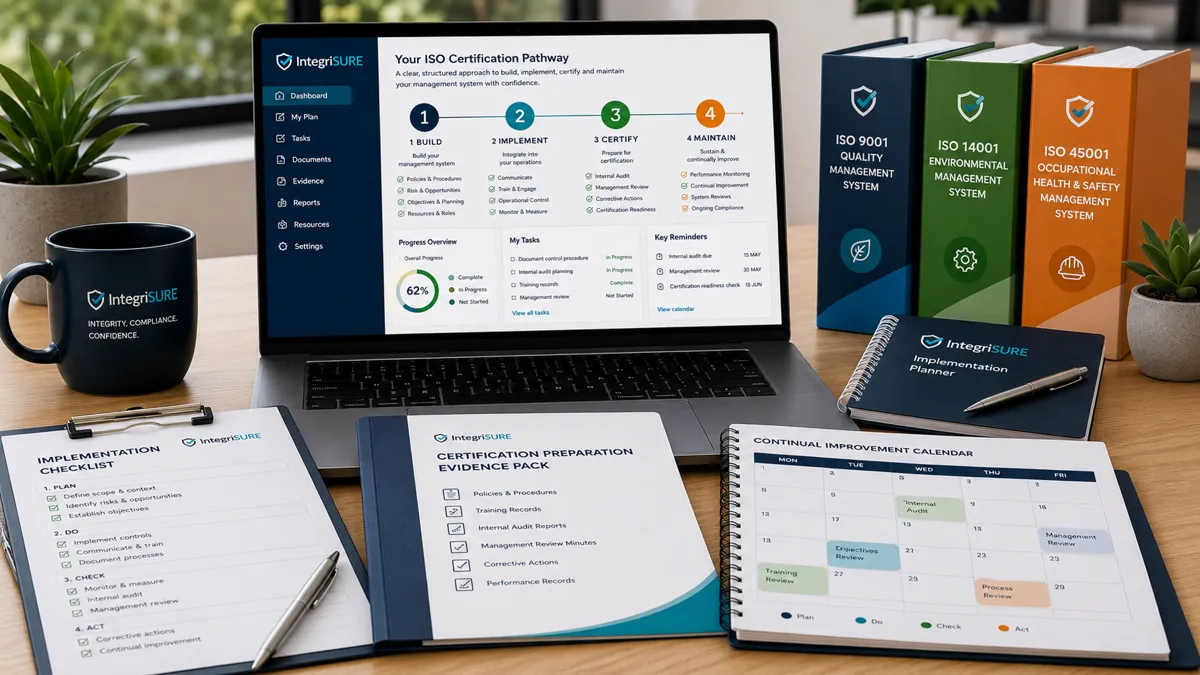
From understanding what ISO involves, to building your management system, rolling it out, preparing for certification and maintaining improvement, IntegriSURE helps your team move forward with clarity.

Certification decisions remain with independent certification bodies, but IntegriSURE helps you prepare with structure, evidence and confidence.

A Practical ISO Certification Pathway for Australian SMEs

Building a Solid Foundation: Documentation and Gap Review

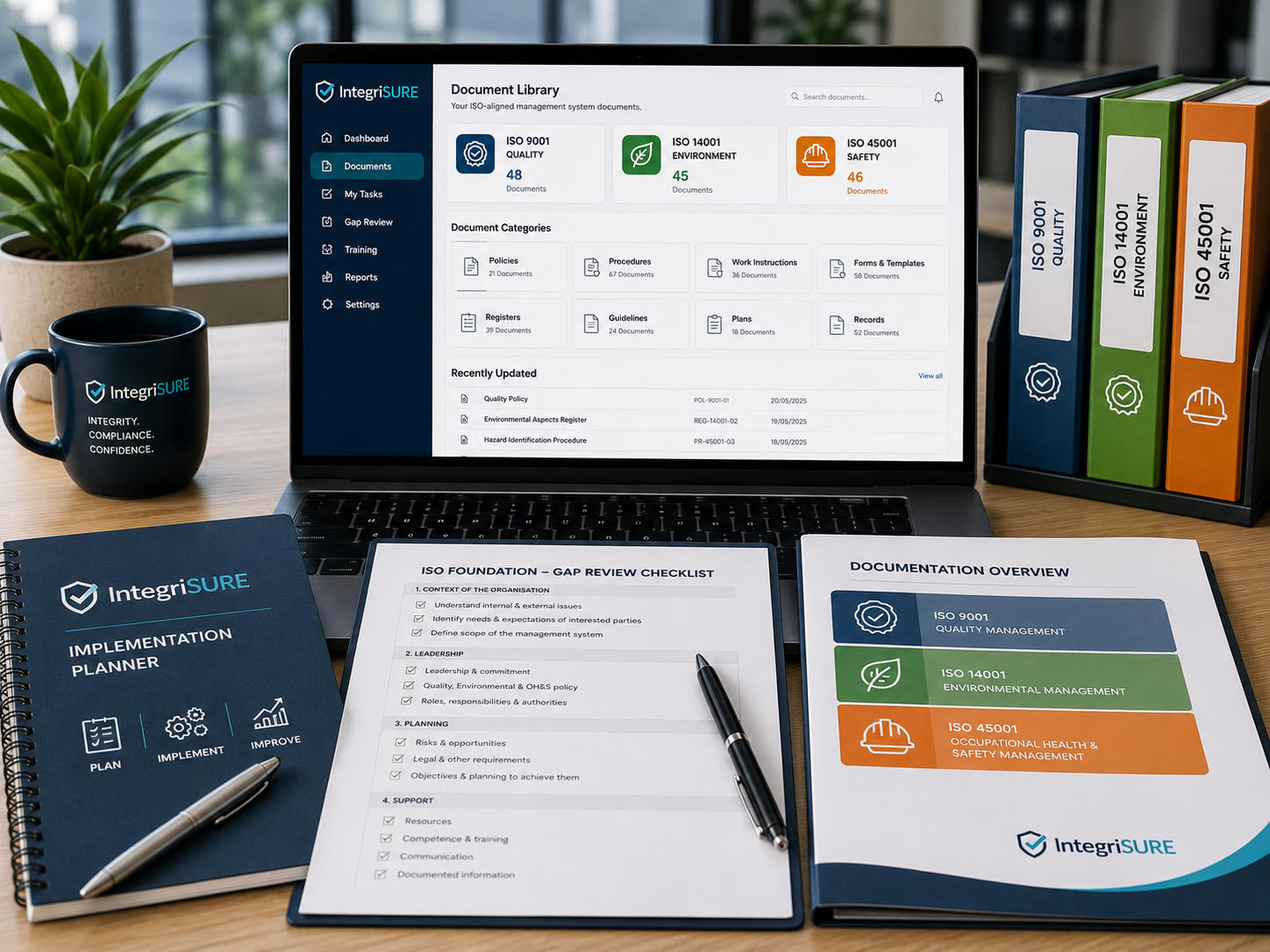
ISO certification starts with understanding what your organisation already has, what is missing and what needs to be implemented. For many SMEs, the challenge is not a lack of capability. It is a lack of structured, documented evidence that shows how the business manages quality, safety, environmental impacts, risks, responsibilities and continual improvement. IntegriSURE helps SMEs build this foundation through ready-to-tailor ISO-aligned documents, including policies, procedures, forms, registers and management system tools. These resources are designed to support ISO 9001, ISO 14001 and ISO 45001, either individually or as part of an integrated management system. A practical gap review helps your organisation identify where current processes already align with ISO requirements and where additional work is needed. This avoids starting from a blank page and helps your team focus effort where it matters most. The goal of this phase is not to create paperwork for its own sake. The goal is to establish a clear, usable management system that reflects how your organisation actually works.
Guided Implementation for a Practical Management System Rollout

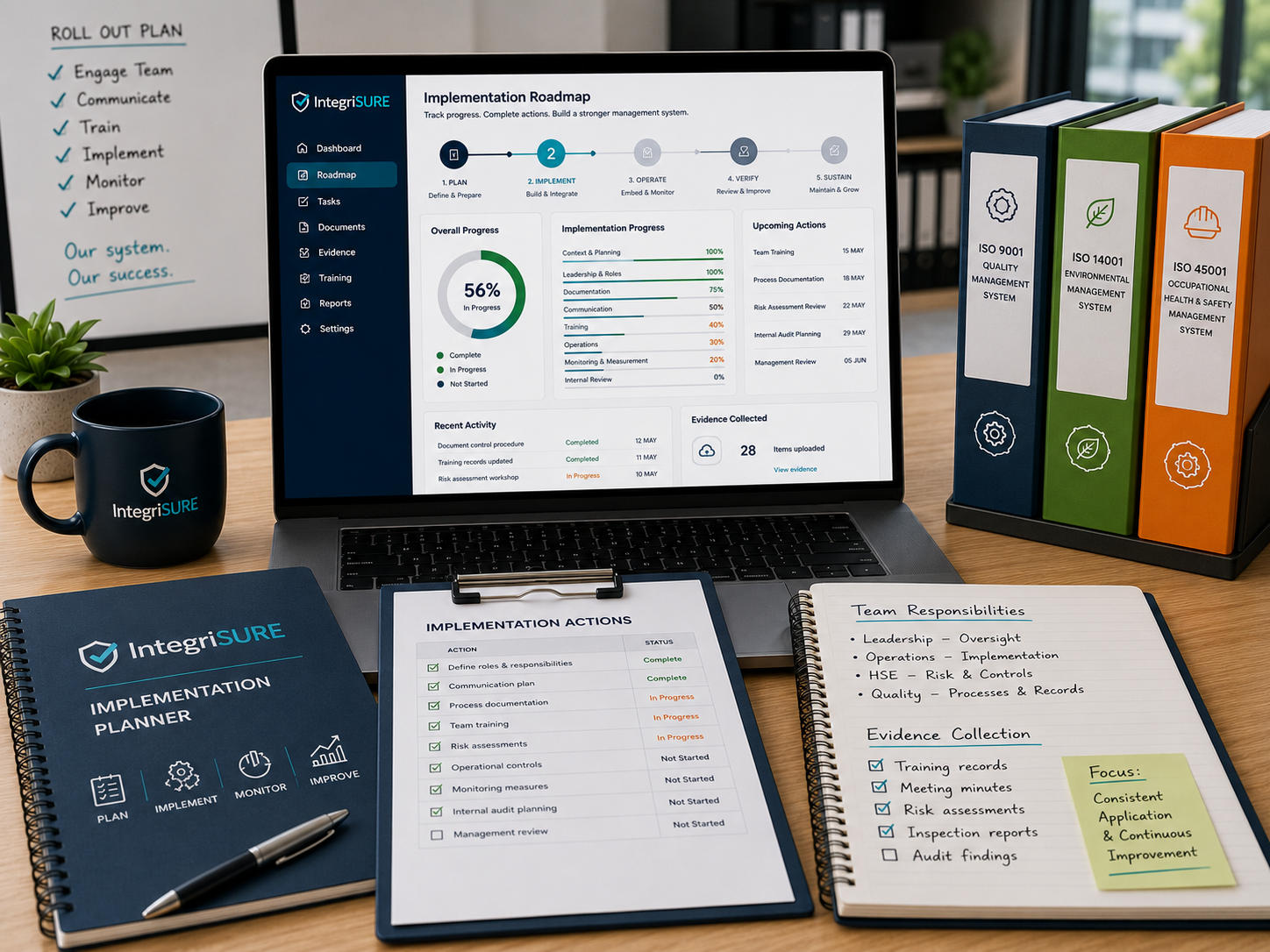
Documents alone do not create an effective management system. Once the foundation is in place, your organisation needs to tailor the documents, assign responsibilities, communicate requirements, use the forms and registers, collect records and embed the system into normal operations. This is where structured implementation matters. IntegriSURE supports management system rollout by helping SMEs understand what to do, what to do next and what evidence to collect along the way. Depending on your selected pathway, this may include implementation guidance, checklists, learning resources, progress tools and optional guided support. The pathway is designed to reduce confusion without taking ownership away from your team. Your organisation remains responsible for implementation, but IntegriSURE provides the structure needed to keep momentum and avoid doing the right things in the wrong order. For SMEs, this is often the most important stage. It is where the management system moves from a document set into a practical operating framework.

Preparing for Certification: Audit Readiness and Evidence

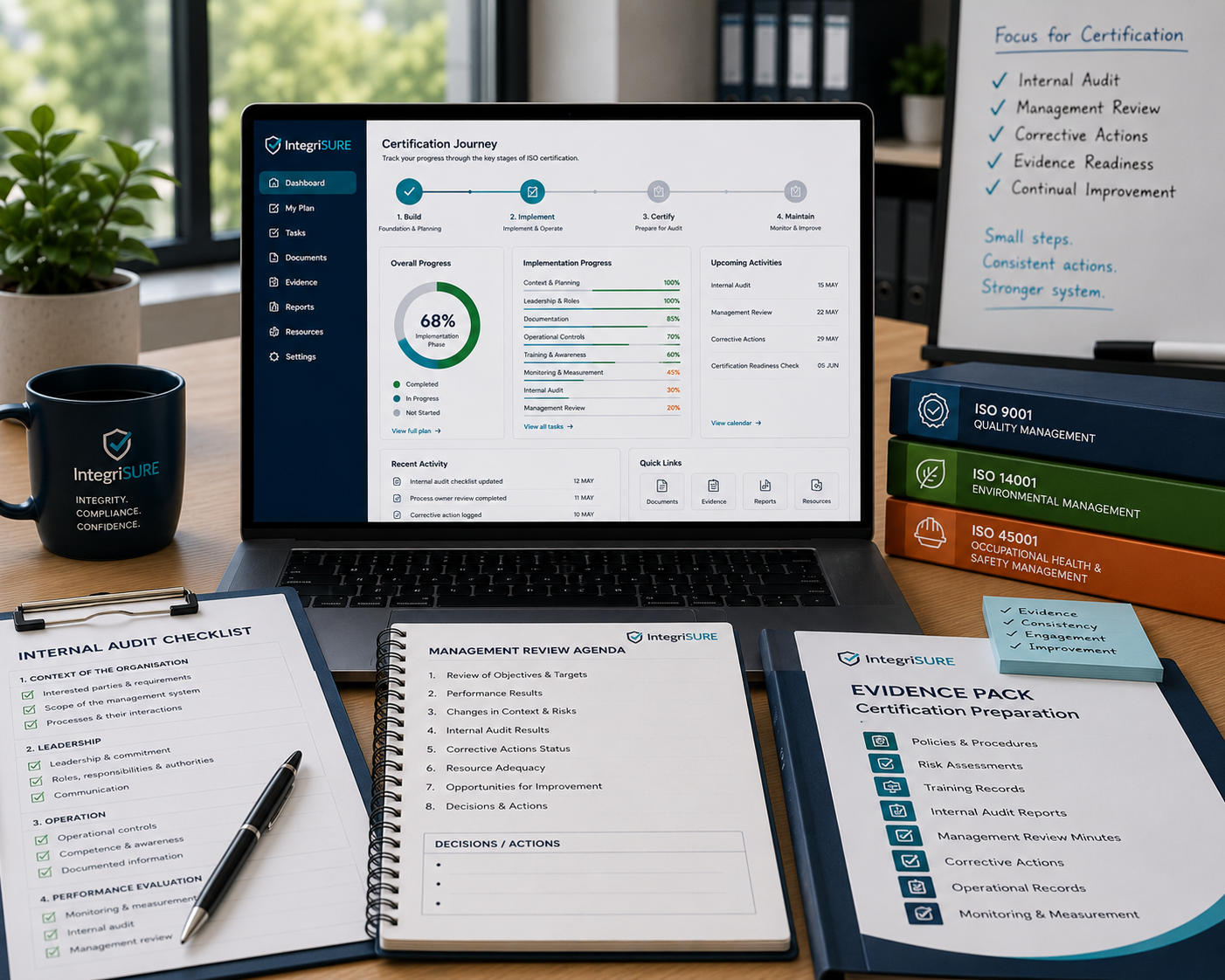
Certification preparation is more than booking an external audit. Your organisation needs to demonstrate that the management system has been implemented, used and reviewed. Auditors will usually look for evidence that processes are operating, responsibilities are understood, records are being kept and improvement actions are being managed. This may include internal audit records, management review minutes, training evidence, risk assessments, operational controls, corrective actions, communication records and completed forms or registers. IntegriSURE helps SMEs prepare by providing structure around what evidence is needed and how it relates to the certification journey. The aim is not to create a false sense of readiness or guarantee an audit outcome. The aim is to help your team understand what needs to be organised before engaging with an independent certification body. When the system has been built and implemented in a structured way, audit preparation becomes less stressful because evidence has been collected progressively.

Maintaining Your Management System After Certification

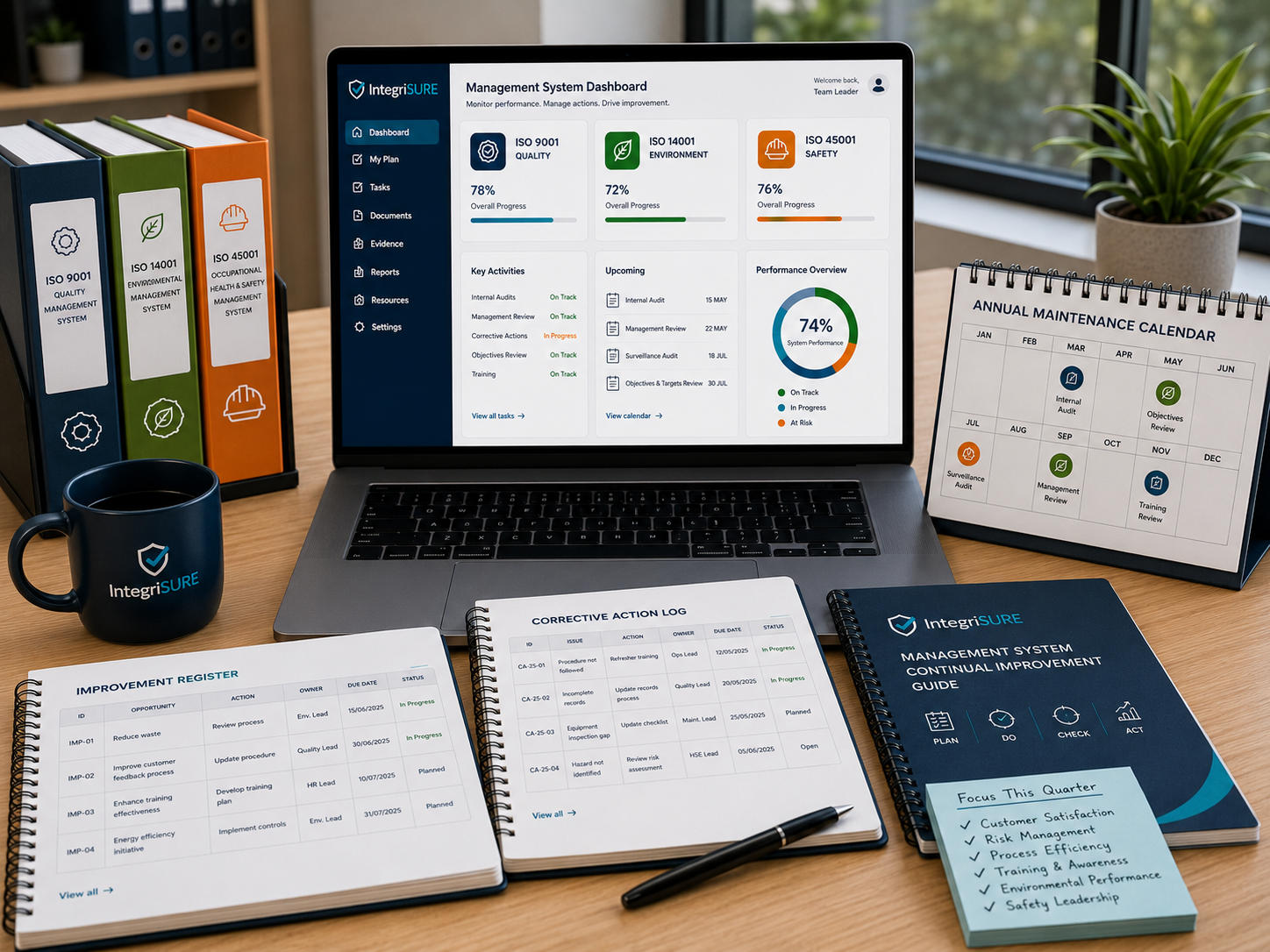
ISO certification is not the end of the journey. Once certified, your organisation needs to keep the management system active through records, internal audits, management reviews, corrective actions, document updates, risk reviews and continual improvement activities. A system that is too complex or consultant-dependent can become difficult to maintain. That is why IntegriSURE focuses on internal ownership. Your team should understand how the system works, what records need to be kept and how to keep improving over time. Maintaining the system also supports business value. It can help your organisation prepare for surveillance audits, respond to client requests, support tenders, manage operational risk and build a more consistent way of working. IntegriSURE’s staged support options allow SMEs to continue using structured tools and guidance after certification, helping the system remain useful rather than becoming a static folder of documents.

Frequently Asked Questions

IntegriSURE provides a structured ISO management system pathway for Australian SMEs. Rather than starting with a large consulting engagement, your organisation can begin with orientation, access ISO-aligned documents, implement the system in stages and add support only when needed.

IntegriSURE supports the certification journey through ready-to-tailor documents, implementation guidance, checklists, learning resources, progress tools and optional guided support. The pathway helps your organisation understand what to build, how to implement it, what evidence to collect and how to prepare for certification where required.

Yes. ISO certification can be achievable for SMEs when the process is structured, proportionate and properly implemented. IntegriSURE is designed to help SMEs reduce confusion, avoid unnecessary consultant dependency and build a management system they can understand, use and maintain.

Depending on the selected pathway, IntegriSURE provides ISO-aligned policies, procedures, forms, registers, management system tools, implementation guidance, checklists and learning resources. These help your organisation build a practical foundation for ISO 9001, ISO 14001 and ISO 45001.

IntegriSURE provides structured implementation resources to help your organisation tailor documents, assign responsibilities, roll out procedures, collect evidence and track progress. Support can remain self-directed or be expanded through guided options where additional clarity is needed.

No. IntegriSURE does not guarantee certification outcomes and does not replace an independent certification body. It helps your organisation build, implement and maintain an ISO-aligned management system so you can prepare for certification with greater structure and confidence.

Yes. IntegriSURE supports ISO 9001 for quality management, ISO 14001 for environmental management and ISO 45001 for occupational health and safety management. Your organisation can focus on one standard or work toward an integrated management system covering all three.